
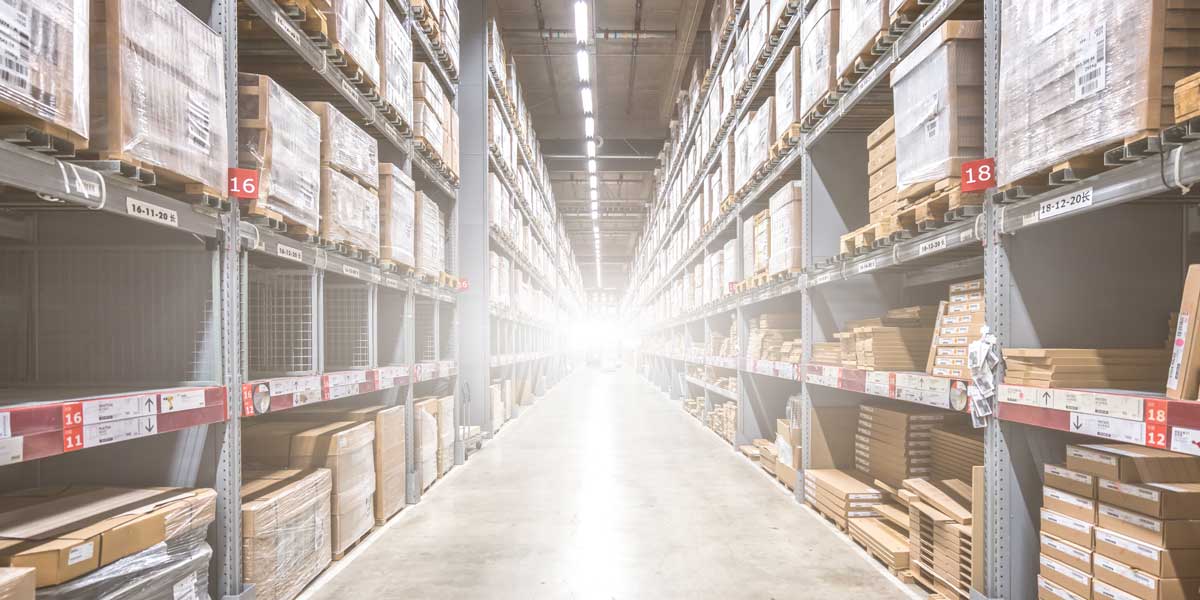
When people hear the word “warehouse,” they often imagine a dusty, dark and cold building filled with rows of boxes and crates. In reality, modern warehouses are clean, bright and bustling centers that help keep the economy moving. Here are five distinct types of warehouses in use today.
Distribution Center
Many people confuse a warehouse with a distribution center and use the terms interchangeably. A warehouse typically stores items for a long period, while a distribution center holds products for a shorter time and handles a much higher volume of inbound and outbound goods. Distribution centers are primarily customer-focused and are typically located near end users. This allows them to receive products quickly and in excellent condition. In addition, distribution centers often provide value-added services such as cross-docking, pick-and-pack operations or simple product mixing and packaging. Because they offer more services than a traditional warehouse, distribution centers are equipped with advanced technology to support the processes within.
Smart Warehouse
A smart warehouse uses automation and interconnected technologies to receive products, store them, pick them for orders, ship them and maintain an accurate inventory count. These warehouses rely on technology to increase efficiency, reduce errors and minimize the number of employees required to operate the facility.
Cold Storage Warehouse
Cold storage warehouses do exactly what their name implies: they store temperature-sensitive items at low temperatures. These facilities help extend the shelf life of medicine, perishable foods, plants, cosmetics, artwork and candles. Cold storage warehouses use refrigerated shipping for both inbound and outbound shipments.
On-Demand Storage
A growing trend in warehousing is on-demand storage. It connects businesses that need temporary, seasonal or overflow warehouse space with facilities that have excess capacity.
Bonded Warehouse
A bonded warehouse, also known as a customs warehouse, is a facility where imported goods can be stored, handled or processed without payment of duty for up to five years from the date of acceptance. Because duties on imported goods can be substantial, the warehouse allows products to be sold first, with duty paid from the proceeds of the sale.
There are many types of warehouses, each offering a range of services and functions. If any of these solutions are relevant to your business, book a meeting today to learn about our full-service warehouse operations in Ohio, Pennsylvania and Utah.